If this were a weather report, I would begin with a warning to prepare for bad weather ahead. More on that later.
First, the good news.
This is the time of year that our highly respected C.A.R. economists publish their forecast for the coming year. I will be borrowing heavily from the informtion they provided. First, their outlook:
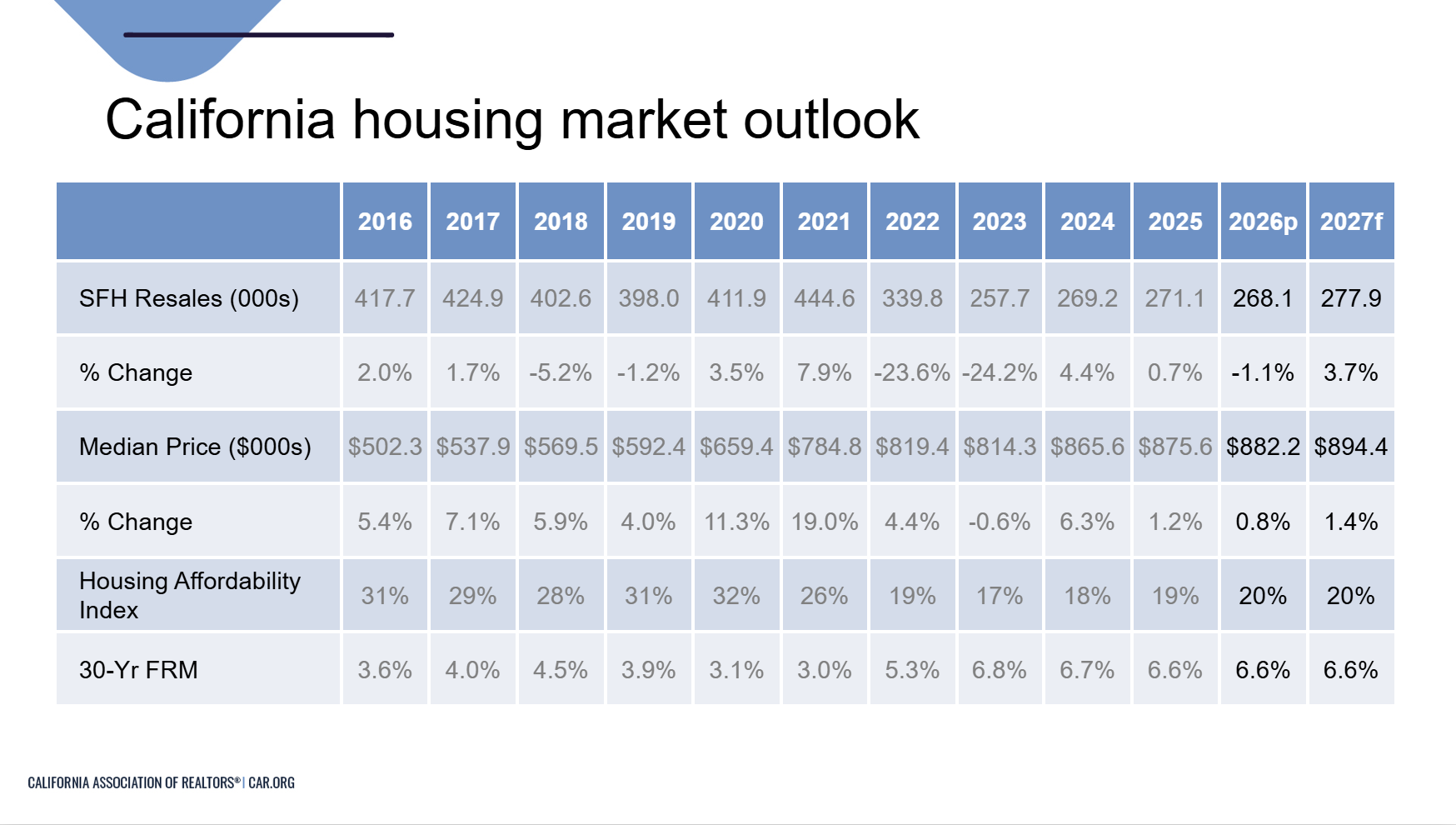
The number of sales for this year are expected to drop by 1.1% from 2025, and are forecasted to rise by 3.7% in 2027.
The Median Price increase is expected to average only 0.8% for 2026, and increase by 1.4% in 2027.
The housing affordability index, the percentage of California residents that can afford a Median Priced home, has risen to 20%, versus 32% in 2020, thanks to dramatic price increases.
C.A.R. is forecasting the 30-Year fixed rate mortgage to end this year at 6.6%, with the same number for 2027. That could be a problem, as the chart below shows the mortgage rate in October was aleady 7.40%. And 30-year treasury bond prices are continuing their upward climb, 5.565% as of today.
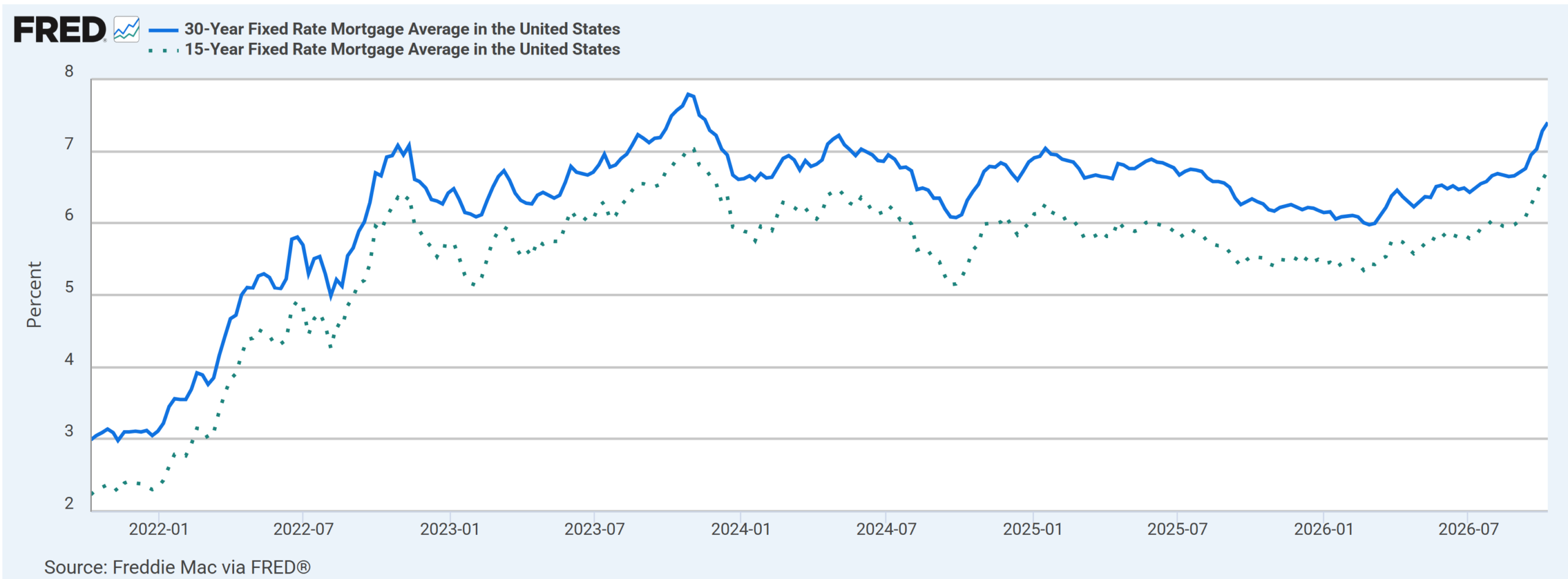
A few years ago, the then-CEO of C.A.R., Joel Singer, opined that low interest rates available due to the mortgage recession and COVID would cause homeowners thinking of selling their home to pause. Although they really like their current home, they love their mortgage rate. (Think 2.65%.) That would cause people to resist moving.
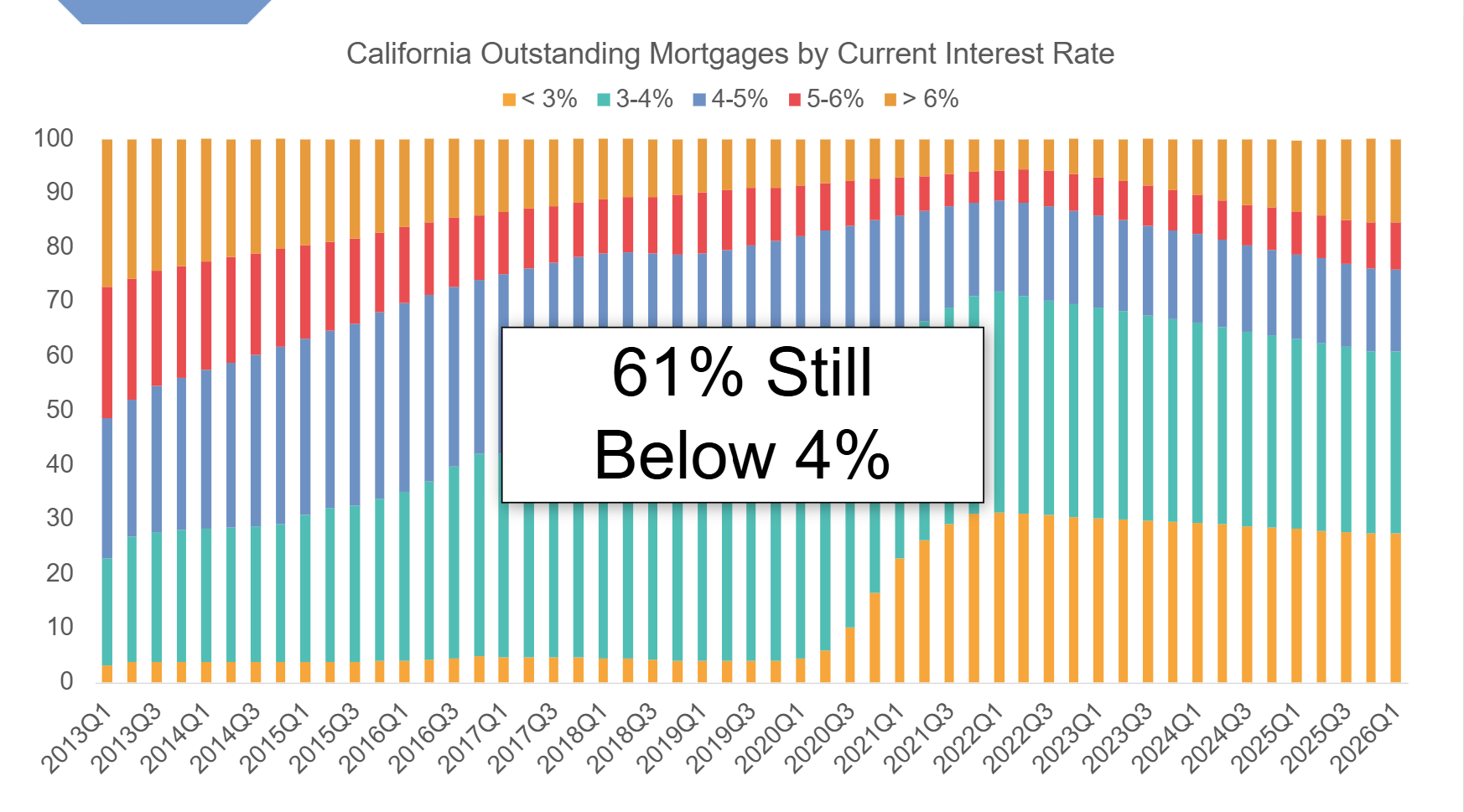
How many of the homeowners that refinanced are still enjoying their low-rate mortgages?
61% of current homeowners have mortgages below 4%, and almost half of those are below 3%. They will be hesitant to walk away from their current mortgage and buy another home with a mortgage at 7.4%.
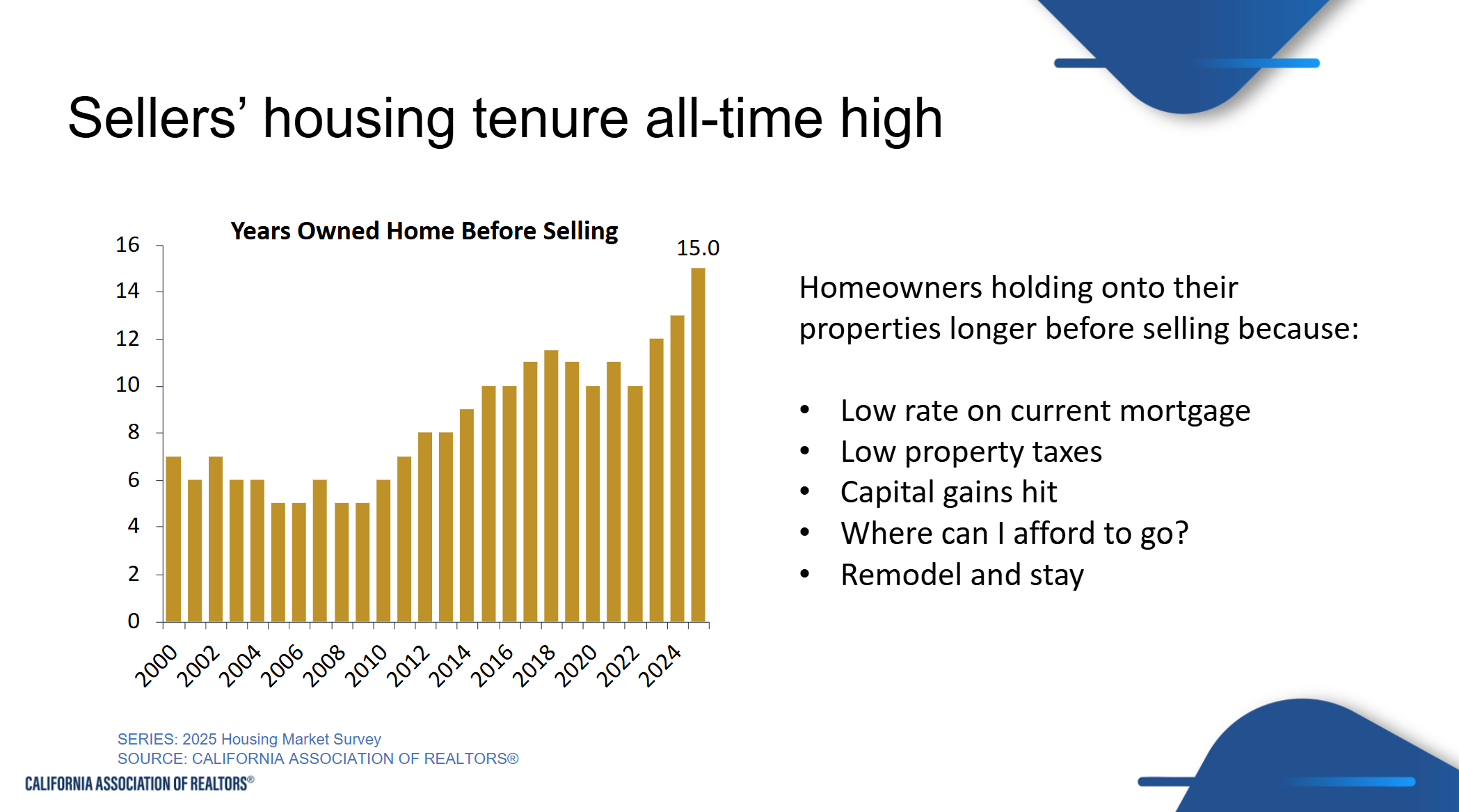
Are those homeowners hanging onto their homes longer than in previous times?
In the early 2000s, homeowners used to buy a home on average every 6 years. Now they own a home on average for 15 years before selling. There are many reasons for the change, listed next to the chart below.
Consumer Sentiment has been polled since 1960. The current index shows that consumer sentiment about the economy is at an all time low. If people are not confident about the future, they may not think this is the best time to purchase a home with a 30-year mortgage.
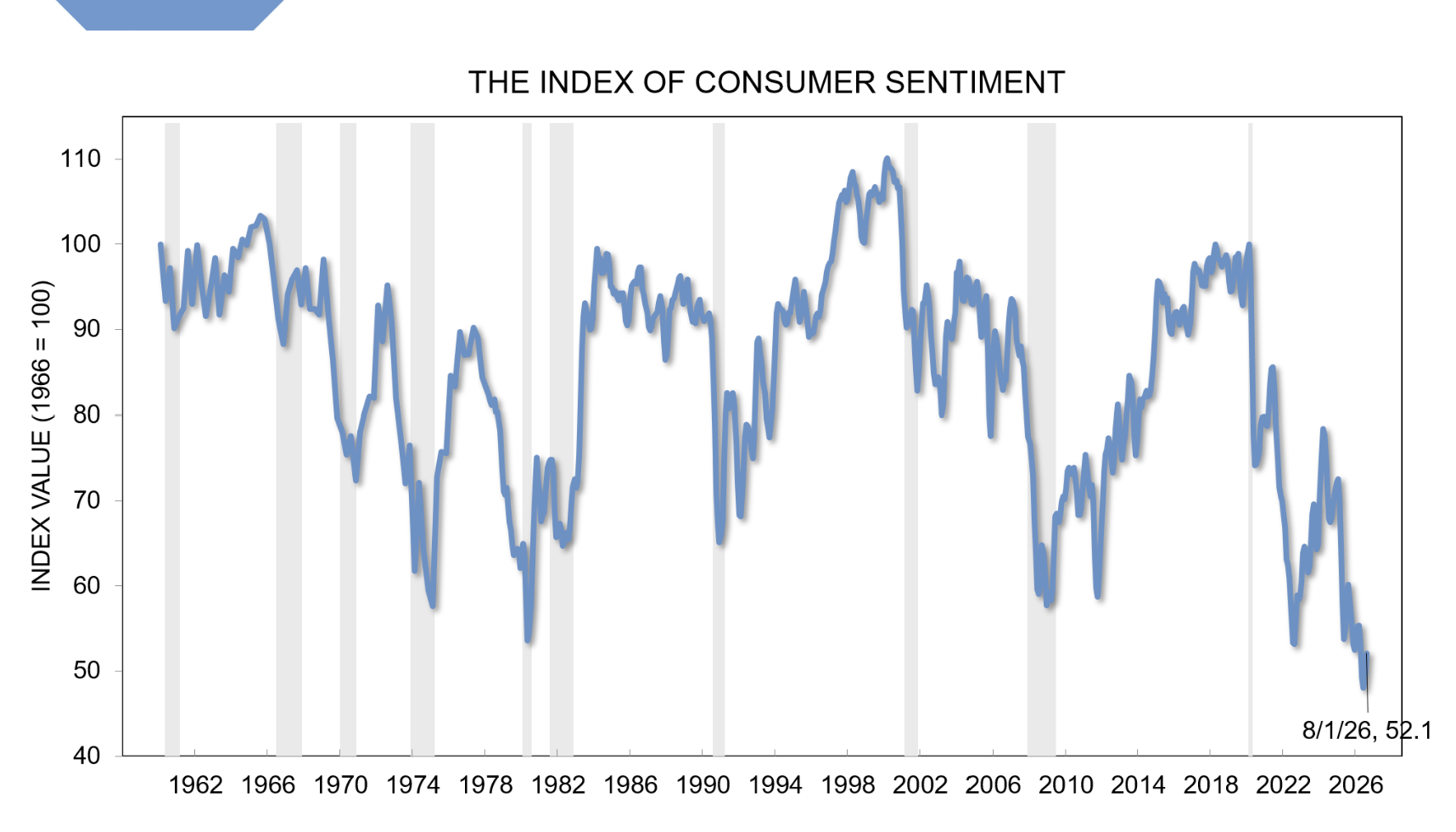
I have been building a story, and it is not a good one. There are currently two major wars active in the world. We are directly involved in one and highly involved in the other. Inflation yesterday was announced at 3.7%. Even more concerning, the Wall Street Journal announced today the Producer Price Index was up 6.54%. This index foretells future price increases due to cost pressure on producers. Inflation will be increasing.
The FED tries to balance inflation and unemployment using the tool of interest rates. But the FED is no longer in total control, due to the World Bond Market and its concerns about U.S. stability. Our national debt now exceeds $40 Trillion and forecast to add $2 Trillion per year for each of the next two years, and the US Dollar no longer seems to be the default safety net for the world. . We have an election in a month, and hope is that may mitigate some of the disruptions we face. Our economy is less than stable.
So how is it that our real estate market continues to be stable?
Maybe not as stable as it has been. We are beginning to see changes in our numbers, and they are indicating a slowdown, and maybe a correction.
Keep in mind that some of these figures are from today, such as inventory. And some of these numbers are based on what happend a month or two ago, such as escrows negotiated 30-60 days ago, but recorded today as closed sales.
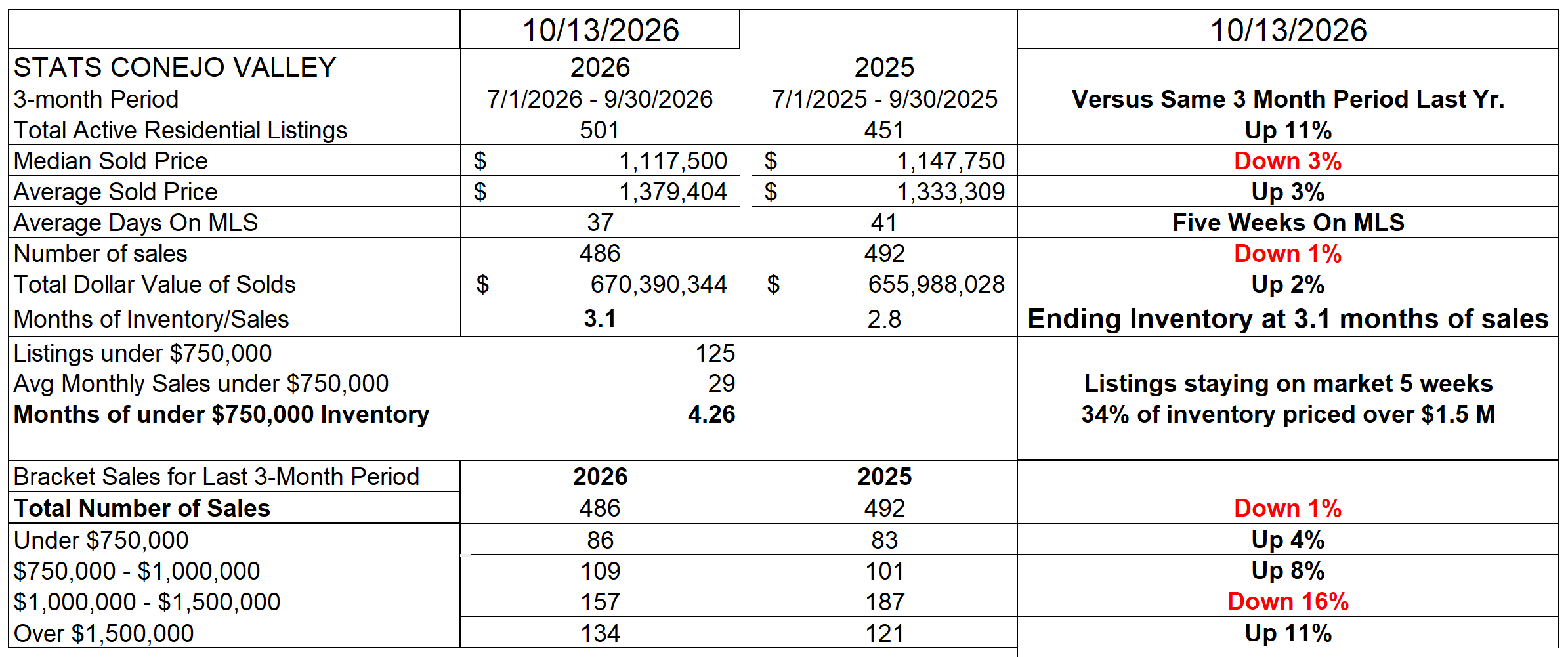
For the Conejo Valley, sales are down 1% compared to the same 3-month period a year ago. Prices are up 3% or down 3%, depending on which measure, Median or Average, you use. The relationship between inventory and sales, reported in the table below as Months of Inventory/Sales, is the key figure to watch. People will always have to sell. The impetus to sell a home is made up of many factors. Some are decisions while others are life happenings. Some have to sell due to circumstances beyond their control: divorces, deaths, job moves or losses, and inability to keep up with mortgage payments including insurance. What will they do if the buyers dry up, and they are not getting offers at their current list price?
The buy side is more flexible, although influenced by outside factors such as interest rates. Buyers know that owning a home is the best way for most of us to build wealth, but to do that they have to have incomes that qualify for mortgage loans, and those increasing rates and insurance costs are beginning to force some buyers to temporarily drop out of the market. The Months of Inventory/Sales is one of the best indicators of a buyers market versus a sellers market. In our market, I suggest less than 3 months favors sellers, between 3-5 months is a market balanced between buyers and sellers, and over 5 months tends to move negotiating power to buyers. We have been stable at 3 months for the last few years, but that may be changing, as inventories rise and purchases decline.
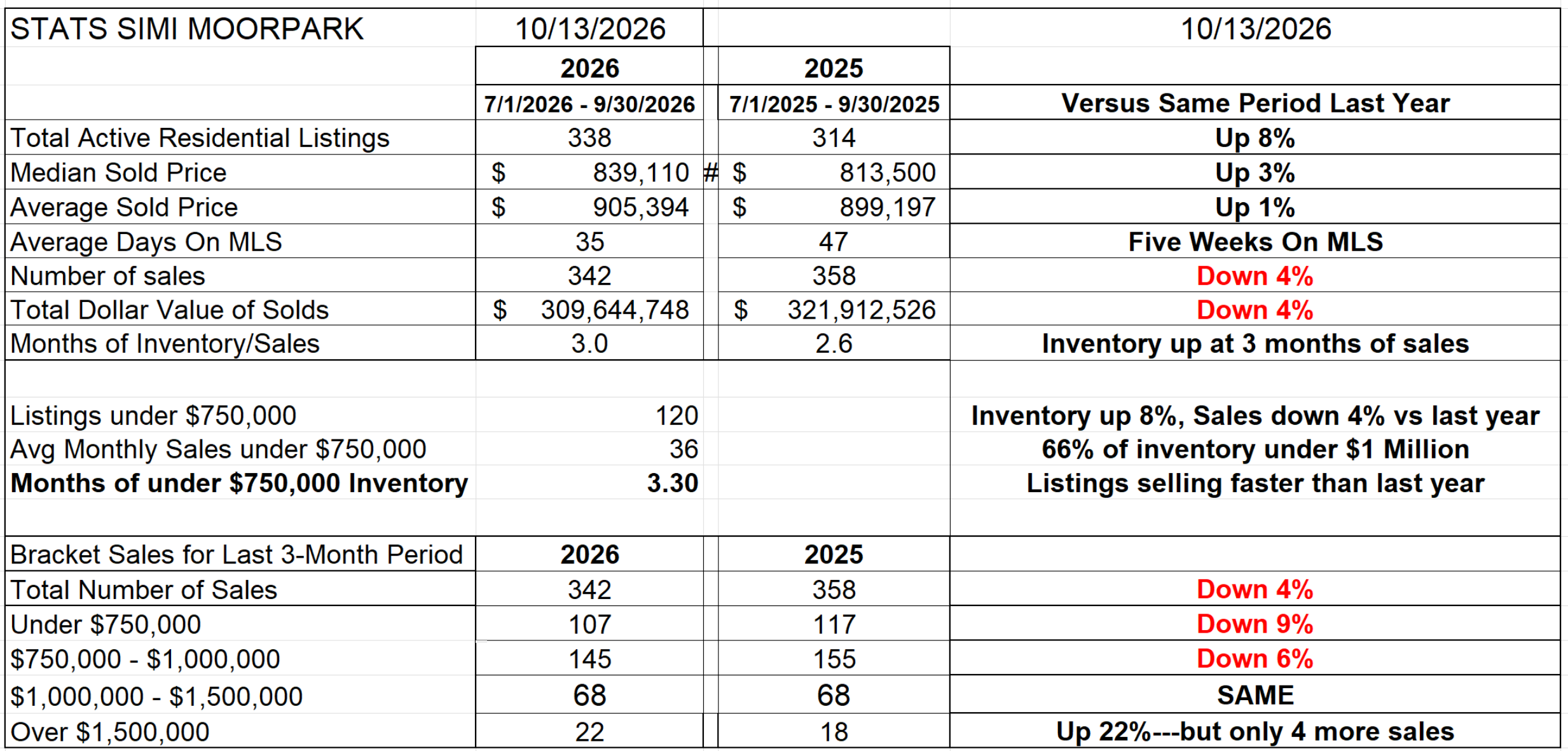
For Simi Valley and Moorpark, a similar change is taking place. Inventory is up 8% versus a year ago, prices up 3% and 1%. But sales are down 4%, and the increase in mortgage interest rates will strongly affect this marketplace.
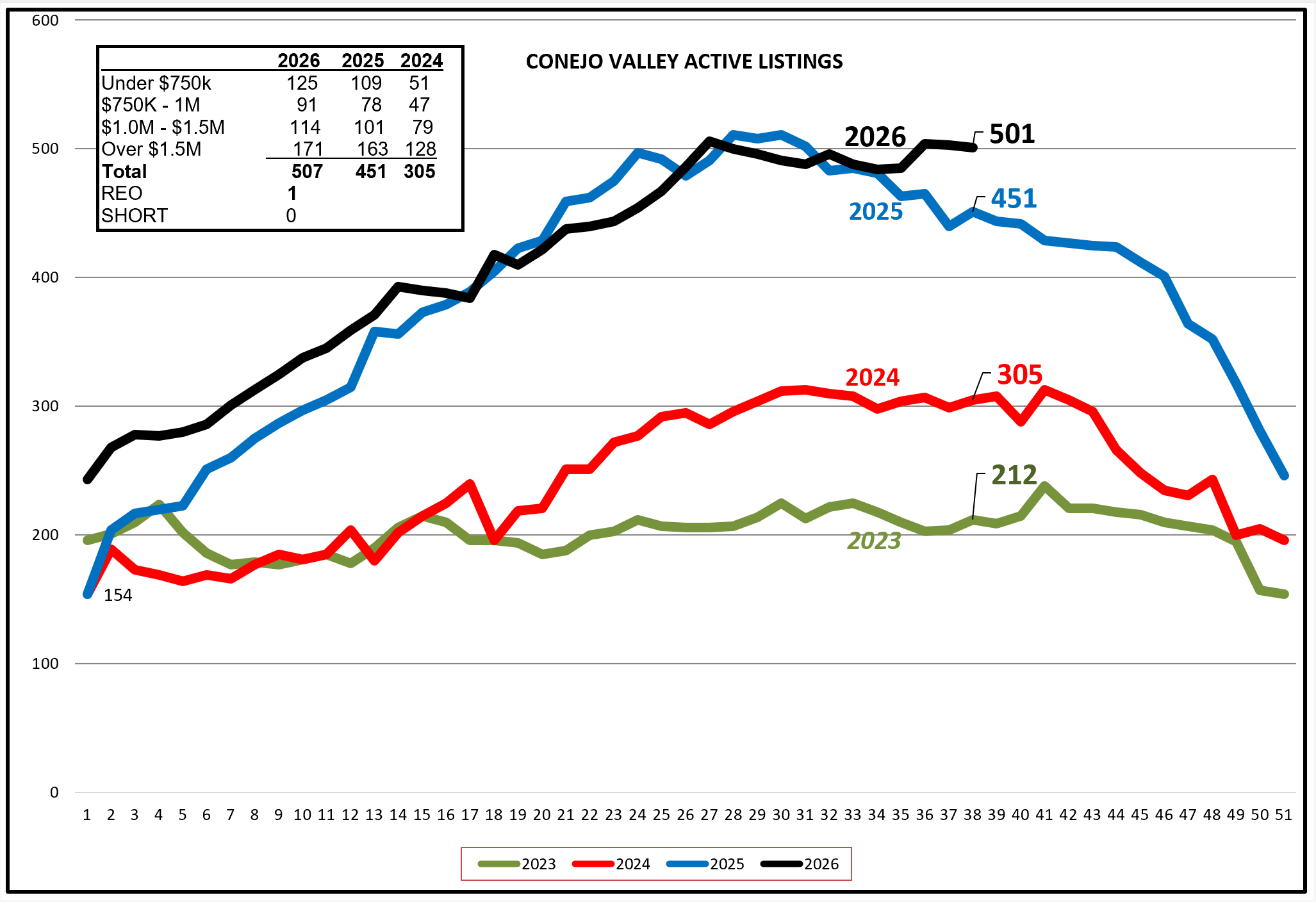
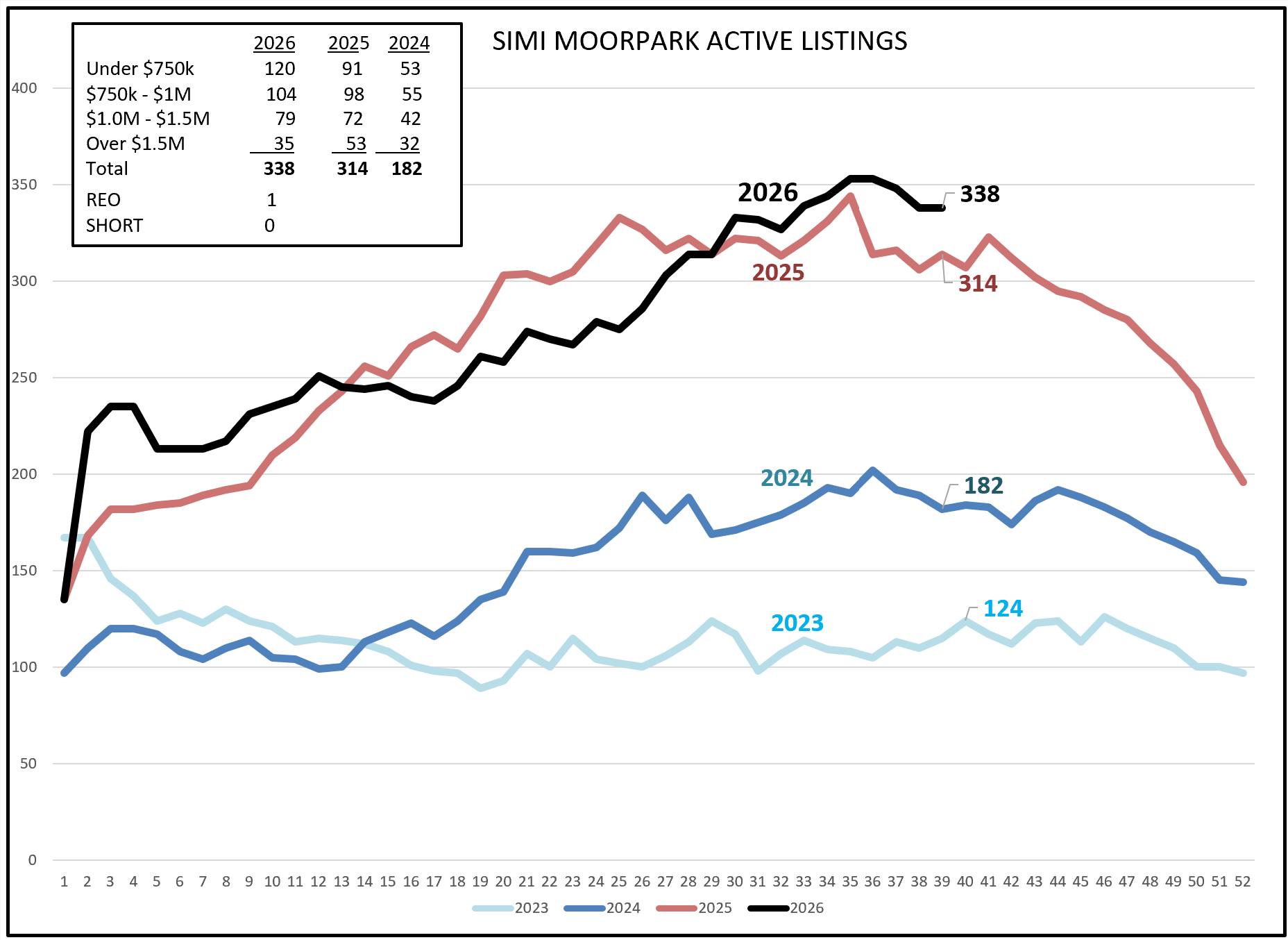
Inventory is up compared to last year. How does it compare to the past few years? Inventory is rising, discounts to list price are happening, and this trend should be watched carefully. Inventories are now higher than the past three years.
For Simi/Moorpark, similar inventory strength. Inventories are higher this year than the last three years.
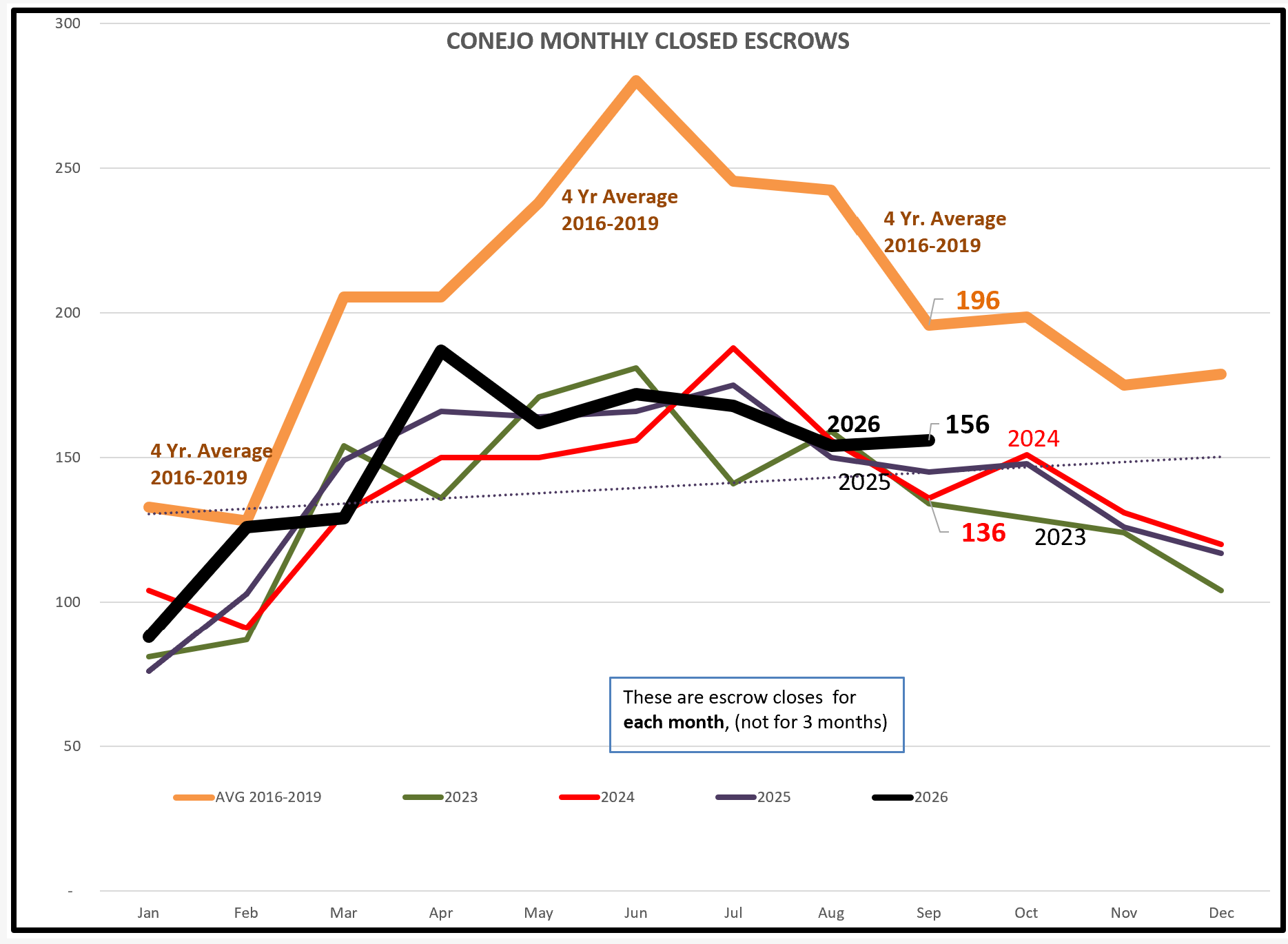
How are sales doing compared to the growth of inventory? Remember, these figures represent the past, contracts that were decided a month or two ago. Sales were agreed to then, but reported 30-60 days later when escrows close. The climb in interest rates reported above may not have yet influenced these escrow closes. This chart shows 2026 following the same activity as the previous three years. However, that level of sales activity remains about 75% of what we used to consider normal.
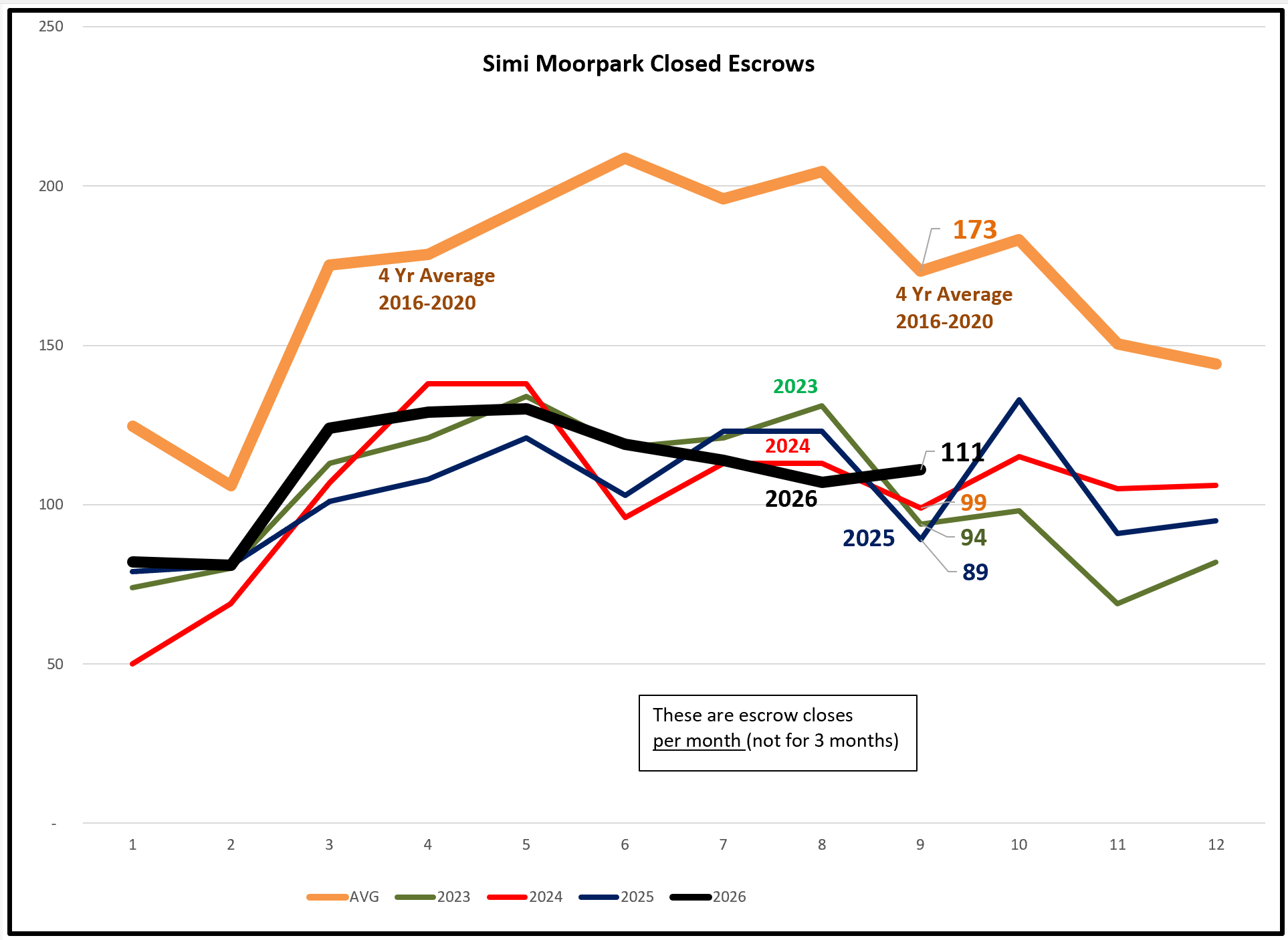
Simi/Moorpark has the same story. Their sales have been consistent for the past four years, but represent only 2/3 of what we used to consider a normal sales year.
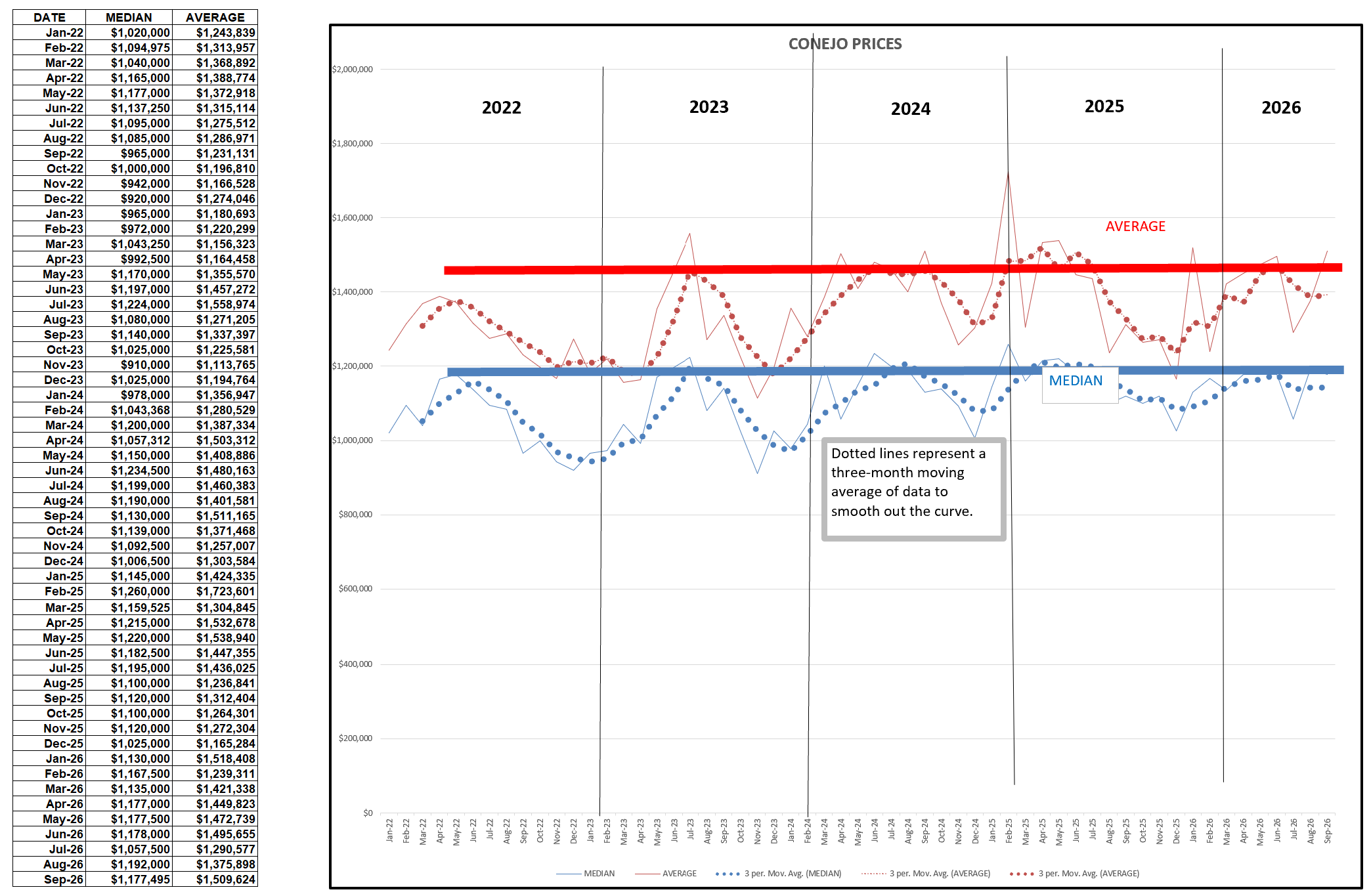
Finally, the price chart for Conejo shows price variation depending on the time of year, but overall there is a ceiling being described for both average and median prices.
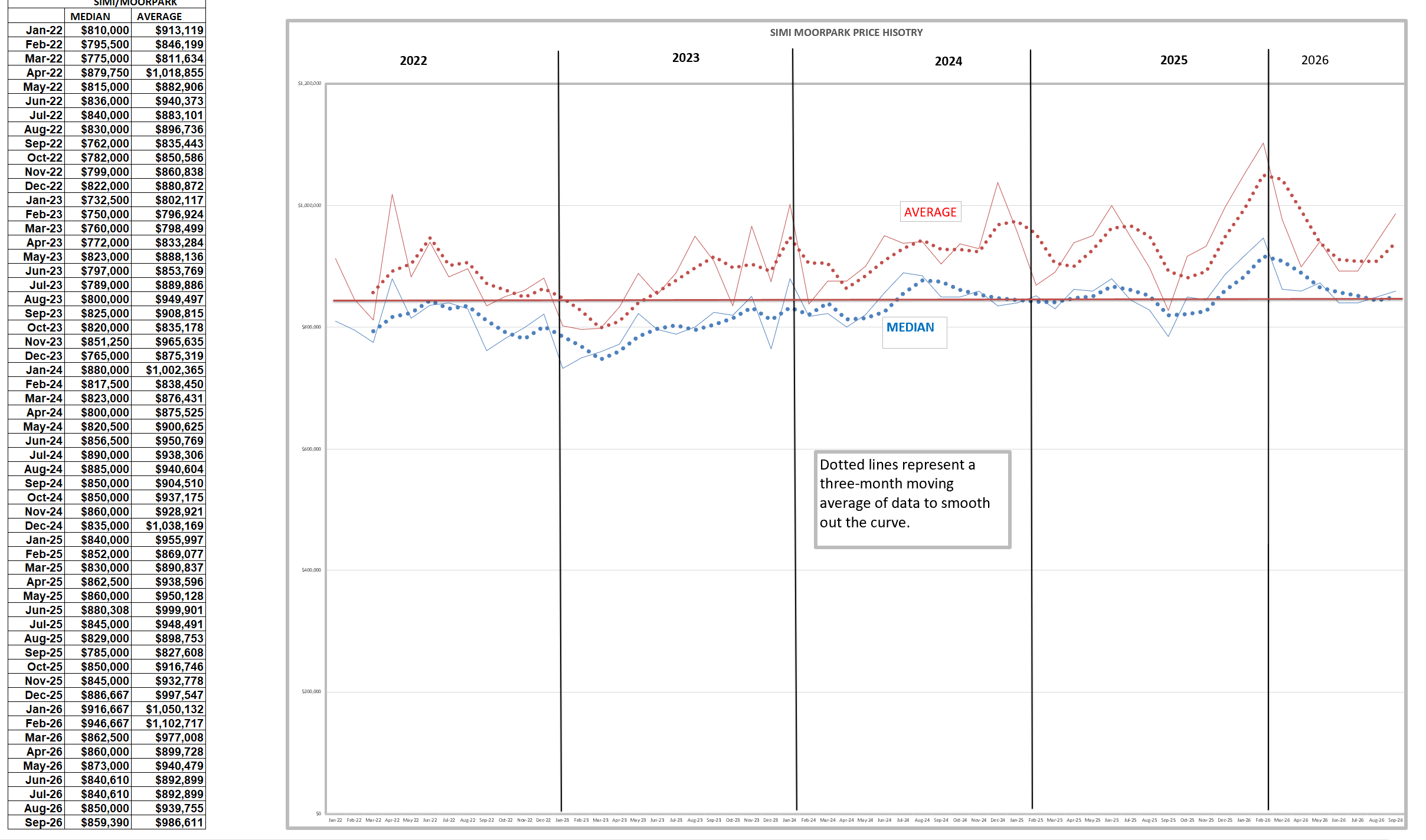
The Simi/Moorpark price chart does not quite follow the same trends as, price patterns are not consistent year to year. I believe they are more interest rate sensitive, but that is an opinion rather than a fact. Taken over the five year history on this chart, prices have remained about the same, with a small increase noticeable, particularly when interest rates hit the 6% range around the beginning of 2026.
That’s where we are today. The future looks reasonable but not rosy. Interest rates are climbing, inflation is growing strongly particularly due to energy prices and tariffs, there is no foreseeable end to oil price problems and cost, and all are causing conern to consumer sentiment.
We need Congress to make changes to make it less expensive to sell a home. N.A.R. is working to double the deduction allowed before paying capital gains tax on the sale of a home. Discussions are taking place to build smaller homes that are desired by both new families and retirees. We have worked to build vibrant communties, and we continue to deal with these issues to get even better. We will see changes, improvements, corrections, new ideas will replace old, real estate will soon be redeveloped, what we first developed.
But things don’t change immediately, they change over time. There is much work still to be done.
Keep working, understanding the market and where we are and where we are headed. Share that information with your clients who trust you to give them advice. We are a market, and prices go up and down, sales numbers go up and down. All that is normal for any market.
And stay safe out there.
Chuck
Recent Comments